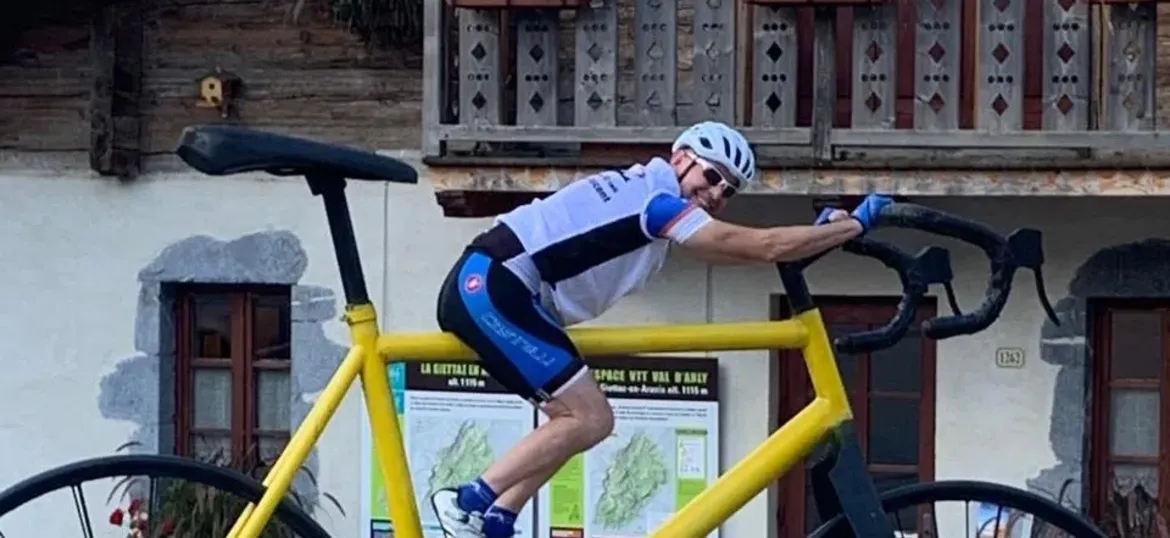
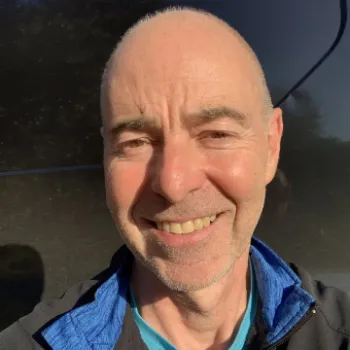
I've been a keen cyclist since I was a boy, sharing the thrill of the ride with my younger brother. Our bikes were our freedom, our shared adventure. But life took a tragic turn. When my brother was just 7, he was killed whilst riding his bike. It was a devastating blow that left me heartbroken and adrift, but somehow, through it all, I never gave up on cycling.
As I grew older, the bike remained my solace, my connection to those simple, happier times with my brother. It became more than a hobby - it was a constant, a lifeline.
However the challenges life threw my way didn't stop there. Years later, I faced my most difficult battle: cancer.
The uncertainty, the fear of the unknown, it all felt like a weight pressing down on me. Yet, it was cycling that kept me going. My surgeon told me that my cycling fitness was key to my recovery. My strength and endurance, built over years of riding, helped me bounce back from surgery faster than expected. I was determined not to let cancer defeat me.
Cycling gave me not only physical strength but also mental strength. When depression threatened to take hold, the bike was there, offering me stability. I could find my peace on two wheels. Sport became my therapy.
My first ride after surgery is something I'll never forget. With scars still healing, both inside and out, I pushed myself in a way I hadn't before. I rode out of the saddle - what we call "honking" in cycling circles - a full 26 miles. It was the toughest ride of my life, but the most rewarding.
During my recovery, two cycling legends - Sir Chris Hoy and Sir Mark Cavendish - became my inspiration. Their stories of triumph, their resilience in the face of adversity, kept me going when I thought I couldn't. If they could accept their battles, surely I could accept mine.
Today, I'm proud to represent Cycling UK, an organisation that does an incredible job promoting not just cycling, but all types of exercise. Their support, their message, is one of inclusion, enjoyment and well-being.
I am filled with a sense of excitement for what comes next. Instead of "honking" those 26 miles, I'm preparing for something even greater: I am going to run those 26 miles.
If you can contribute, by way of a donation, I would be so grateful.
About the London Marathon
The London Marathon has become an annual, inspiring and colourful fixture in the world’s sporting calendar since the inaugural race on 29 March 1981: a celebration of fun, fundraising and fancy dress.
Over the years more than a million people have completed the 26.2-mile course – which runs from Blackheath to The Mall, with a spectacular finish in front of Buckingham Palace, showcasing the very best that the capital city has to offer.
What’s more, these participants have raised over a billion pounds for charity and there have been countless amazing tales of human achievement throughout the event’s history – living up to its aim of helping participants ‘to have fun, and provide some happiness and sense of achievement in a troubled world’.
I've been a keen cyclist since I was a boy, sharing the thrill of the ride with my younger brother. Our bikes were our freedom, our shared adventure. But life took a tragic turn. When my brother was just 7, he was killed whilst riding his bike. It was a devastating blow that left me heartbroken and adrift, but somehow, through it all, I never gave up on cycling.
As I grew older, the bike remained my solace, my connection to those simple, happier times with my brother. It became more than a hobby - it was a constant, a lifeline.
However the challenges life threw my way didn't stop there. Years later, I faced my most difficult battle: cancer.
The uncertainty, the fear of the unknown, it all felt like a weight pressing down on me. Yet, it was cycling that kept me going. My surgeon told me that my cycling fitness was key to my recovery. My strength and endurance, built over years of riding, helped me bounce back from surgery faster than expected. I was determined not to let cancer defeat me.
Cycling gave me not only physical strength but also mental strength. When depression threatened to take hold, the bike was there, offering me stability. I could find my peace on two wheels. Sport became my therapy.
My first ride after surgery is something I'll never forget. With scars still healing, both inside and out, I pushed myself in a way I hadn't before. I rode out of the saddle - what we call "honking" in cycling circles - a full 26 miles. It was the toughest ride of my life, but the most rewarding.
During my recovery, two cycling legends - Sir Chris Hoy and Sir Mark Cavendish - became my inspiration. Their stories of triumph, their resilience in the face of adversity, kept me going when I thought I couldn't. If they could accept their battles, surely I could accept mine.
Today, I'm proud to represent Cycling UK, an organisation that does an incredible job promoting not just cycling, but all types of exercise. Their support, their message, is one of inclusion, enjoyment and well-being.
I am filled with a sense of excitement for what comes next. Instead of "honking" those 26 miles, I'm preparing for something even greater: I am going to run those 26 miles.
If you can contribute, by way of a donation, I would be so grateful.
About the London Marathon
The London Marathon has become an annual, inspiring and colourful fixture in the world’s sporting calendar since the inaugural race on 29 March 1981: a celebration of fun, fundraising and fancy dress.
Over the years more than a million people have completed the 26.2-mile course – which runs from Blackheath to The Mall, with a spectacular finish in front of Buckingham Palace, showcasing the very best that the capital city has to offer.
What’s more, these participants have raised over a billion pounds for charity and there have been countless amazing tales of human achievement throughout the event’s history – living up to its aim of helping participants ‘to have fun, and provide some happiness and sense of achievement in a troubled world’.